An overbite is a type of bite misalignment where the upper front teeth overlap the lower front teeth more than usual. While some degree of overlap is normal, a more pronounced overbite may affect the way the teeth meet and, in some cases, contribute to tooth wear or contact with the gums or palate.
Braces are one of the orthodontic treatment options that may be used to address certain types of overbite. However, the appropriate approach depends on factors such as the position of the teeth, the severity of the overbite, and the relationship between the upper and lower jaws.
If you are considering braces for an overbite, understanding how treatment works and what options may be available can help you have a more informed discussion with an orthodontic professional.
Read More: How to Help Children with Dental Anxiety
What Is an Overbite?
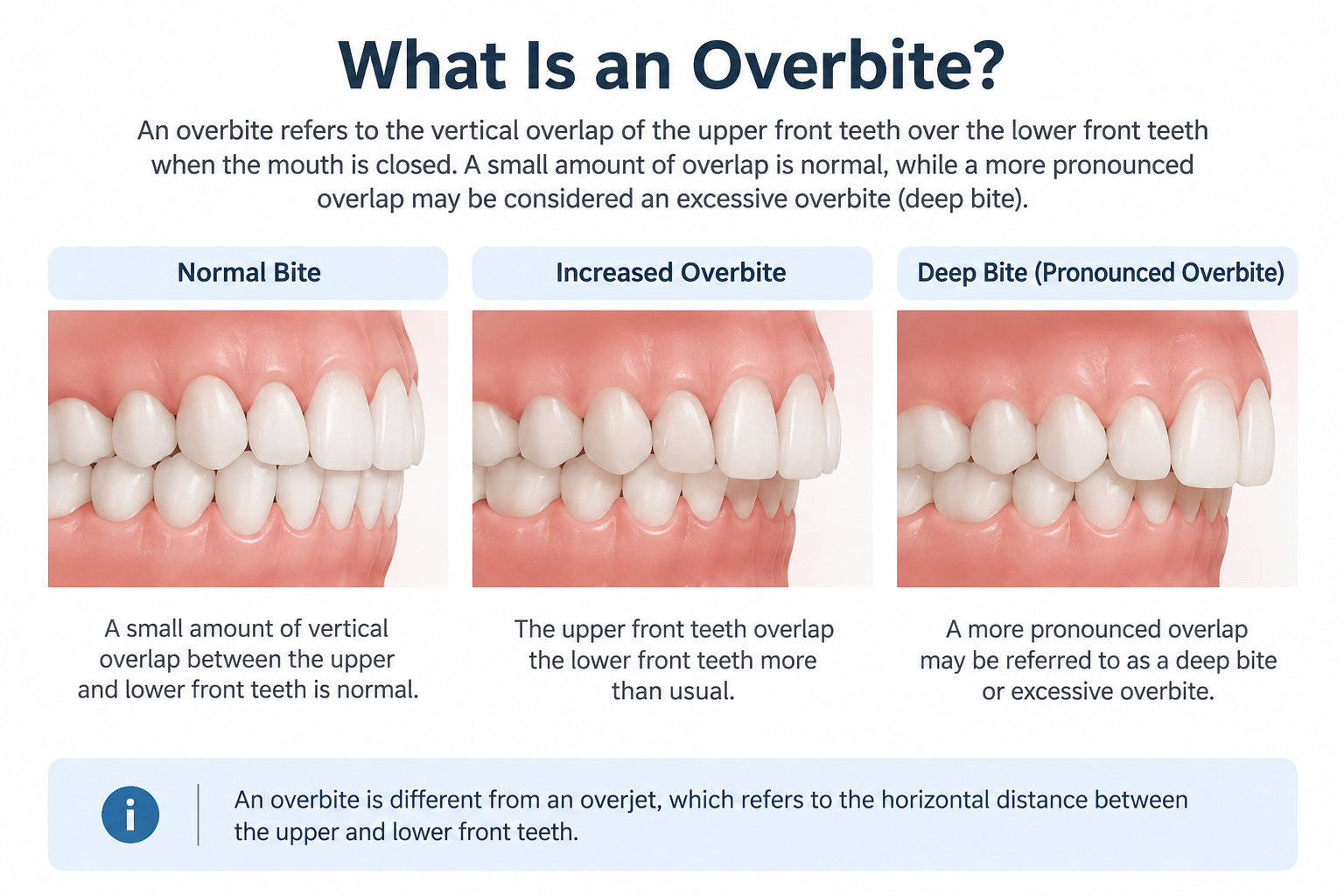
An overbite refers to the vertical overlap of the upper front teeth over the lower front teeth when the mouth is closed.
A certain amount of vertical overlap is normal and helps the upper and lower teeth function together. An excessive overlap may be described as a deep bite.
An overbite is different from an overjet. While an overbite refers mainly to the vertical overlap between the upper and lower front teeth, an overjet refers to the horizontal distance between them.
The appearance and severity of an overbite can vary considerably from person to person. Some cases may be relatively mild, while others may involve a more pronounced overlap.
What Causes an Overbite?
There is not always one single cause of an overbite. It can develop from a combination of dental and skeletal factors.
Genetics and Jaw Development
The size and shape of the upper and lower jaws can influence how the teeth come together. Differences in jaw development may contribute to the development of an excessive overbite.
Tooth Position
The position and inclination of the front teeth can affect how much the upper teeth overlap the lower teeth. Crowding and other forms of tooth misalignment may also affect the bite.
Childhood Oral Habits
Certain prolonged childhood habits, such as thumb sucking or prolonged pacifier use, may influence the development and positioning of the teeth.
Changes in the Teeth
Missing teeth, premature tooth loss, or changes in tooth position can also affect the way the upper and lower teeth meet.
Because an overbite can have different causes, looking at the teeth alone may not provide the complete picture. An orthodontic assessment can help determine the nature of the bite problem and whether treatment is appropriate.
When Does an Overbite Need Treatment?
Not every overbite requires orthodontic treatment. A dentist or orthodontist can assess whether the degree of overlap is within an acceptable range or whether it may cause functional or dental concerns.
-
A more pronounced overbite may sometimes be associated with:
- Excessive wear of the teeth
- Difficulty cleaning certain areas
- Contact between the lower teeth and the upper gums or palate
- Changes in the way the teeth meet
- Functional concerns when biting or chewing
- Concerns about the appearance of the teeth
The need for treatment depends on the individual case. An assessment can help determine whether monitoring or orthodontic treatment is appropriate.
Read More: What Is a Palate Expander?
Can Braces Correct an Overbite?
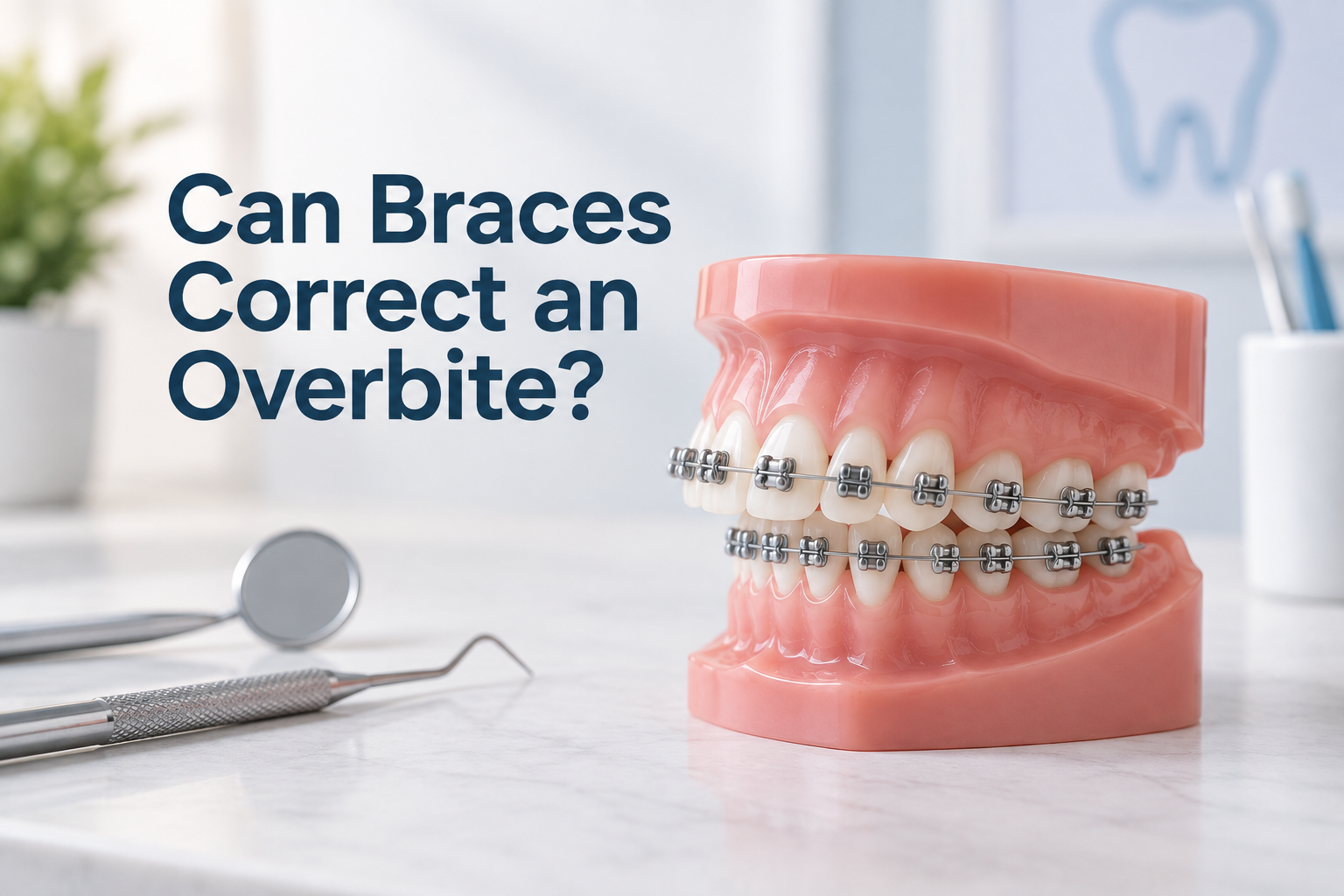
Braces may be used to correct certain types of overbite by gradually repositioning the teeth.
Orthodontic braces apply controlled forces to the teeth over time. Depending on the individual’s bite, treatment may involve moving the upper teeth, lower teeth, or both to establish a more appropriate relationship between them.
However, not every overbite has the same underlying cause. An overbite that is primarily related to tooth positioning may be approached differently from one involving a significant difference in the underlying jaw relationship.
For this reason, there is no single braces treatment that is suitable for every person with an overbite. The appropriate treatment plan depends on the individual’s dental and orthodontic assessment.
How Do Braces Correct an Overbite?
Treatment generally involves several stages.
1. Orthodontic Assessment
The first step is to assess the teeth and bite. Depending on the case, this may involve photographs, X-rays, digital scans, or other diagnostic records.
The assessment helps the orthodontist understand the position of the teeth and the relationship between the upper and lower jaws.
2. Treatment Planning
Once the bite has been assessed, an appropriate treatment approach can be discussed.
Factors that may be considered include:
- Severity of the overbite
- Tooth position
- Crowding or spacing
- Jaw relationship
- Dental development
- Overall oral health
- Type of orthodontic appliance
- Age of the patient
3. Braces Placement
If fixed braces are selected, brackets are attached to the teeth and connected using orthodontic wires. These components work together to apply controlled forces to gradually move the teeth. Sometimes, auxiliary orthodontic appliances like anterior bite plate may be required to aid in reducing the deep overbite. For anterior open bites, extractions or temporary anchorage devices may be required.
4. Regular Follow-Up
Orthodontic treatment involves regular appointments so that the progress of tooth movement can be assessed and the appliance adjusted when necessary.
The frequency and duration of appointments depend on the treatment plan.
5. Retention
After active orthodontic treatment, retainers are commonly used to help maintain the position of the teeth.
Teeth can naturally shift over time, so retention is an important consideration after braces treatment.
What Types of Braces Can Be Used for an Overbite?
Different orthodontic appliances may be considered depending on the individual’s treatment requirements and preferences.
Metal Braces
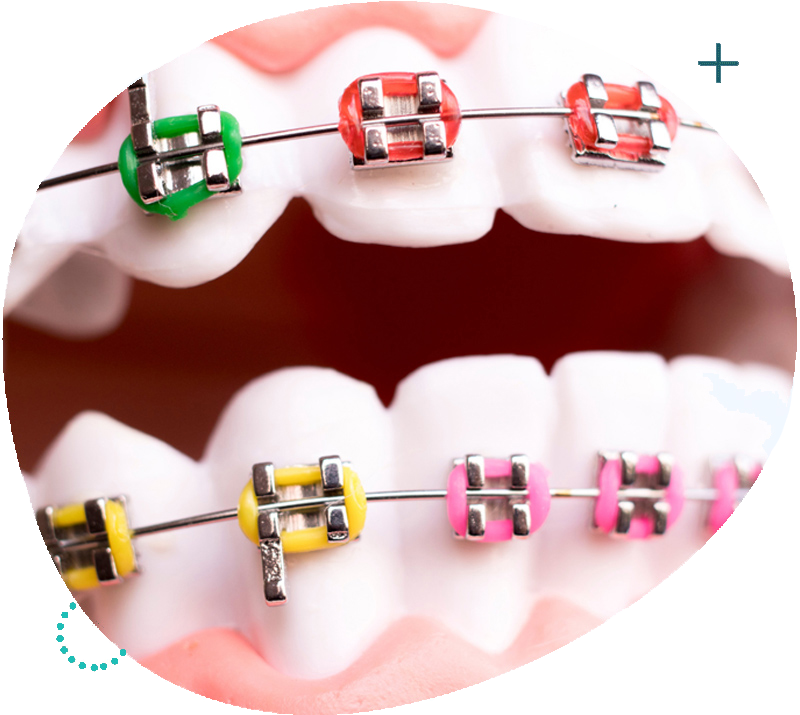
Metal braces are a fixed orthodontic appliance consisting of brackets and wires. They can be used to address a range of tooth alignment and bite problems.
They remain one of the treatment options that may be considered for patients with an overbite.
Ceramic Braces
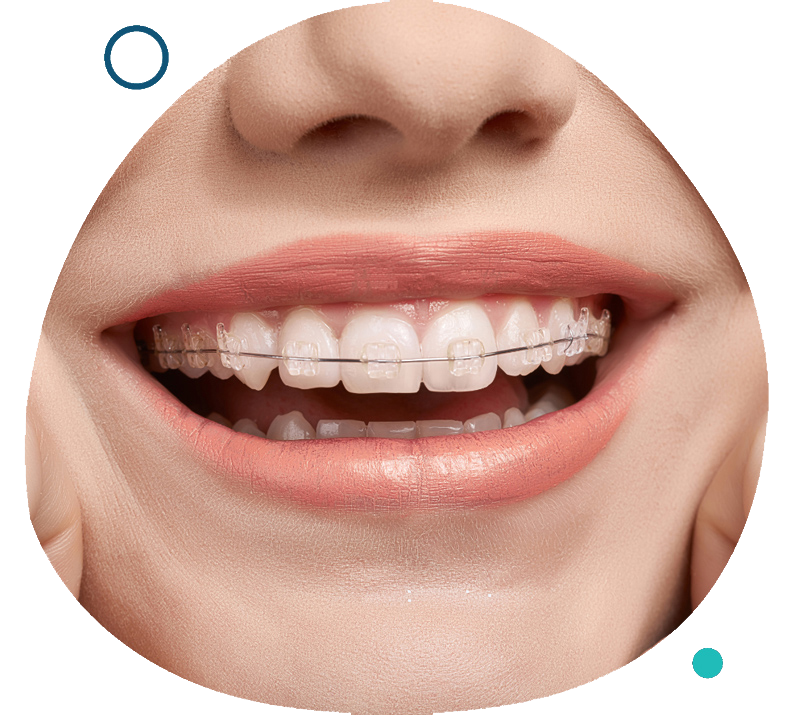
Ceramic braces use tooth-coloured or less noticeable brackets. They work on the same basic orthodontic principle of applying controlled forces to move teeth.
They may be considered by patients who prefer a less noticeable fixed appliance.
Damon Braces
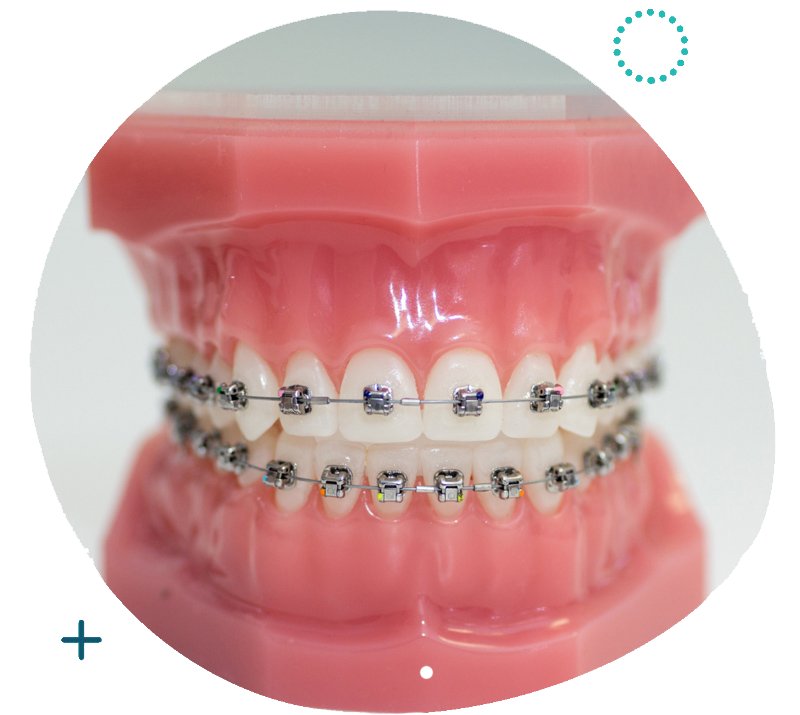
Damon braces are another type of fixed orthodontic appliance. They use a different bracket design from conventional braces.
Whether they are appropriate depends on the individual’s orthodontic requirements and treatment plan.
Learn more about our Damon Braces Treatments: Damon Q: Self-Ligating Braces & Damon Clear: Self-Ligating Braces
Invisalign
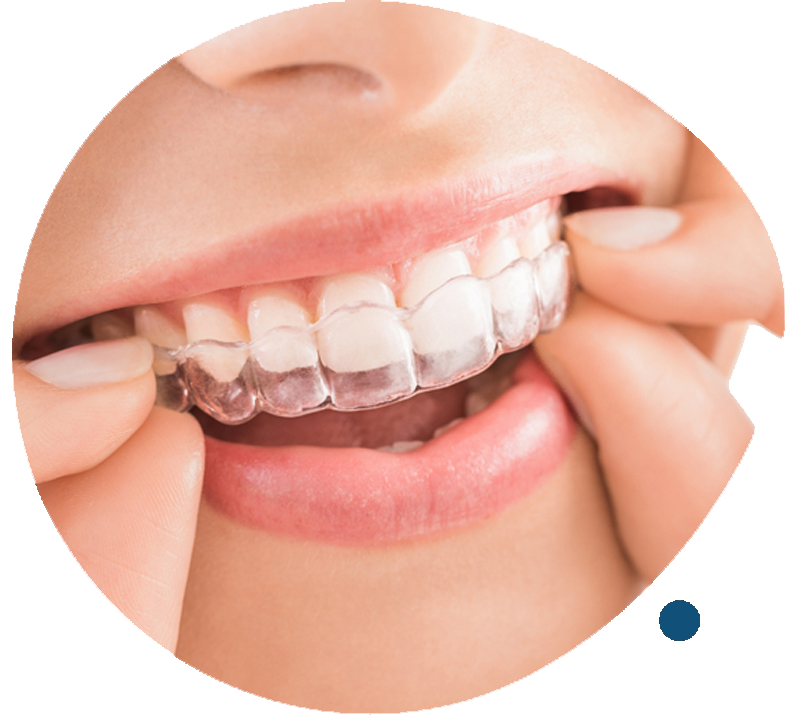
Invisalign uses a series of clear, removable aligners to gradually move the teeth.
Some overbite cases may be suitable for clear aligner treatment, although suitability depends on factors such as the type and severity of the bite problem and the movements required.
An orthodontic assessment is necessary to determine whether clear aligners are appropriate for a particular case.
How Long Does It Take to Treat an Overbite With Braces?
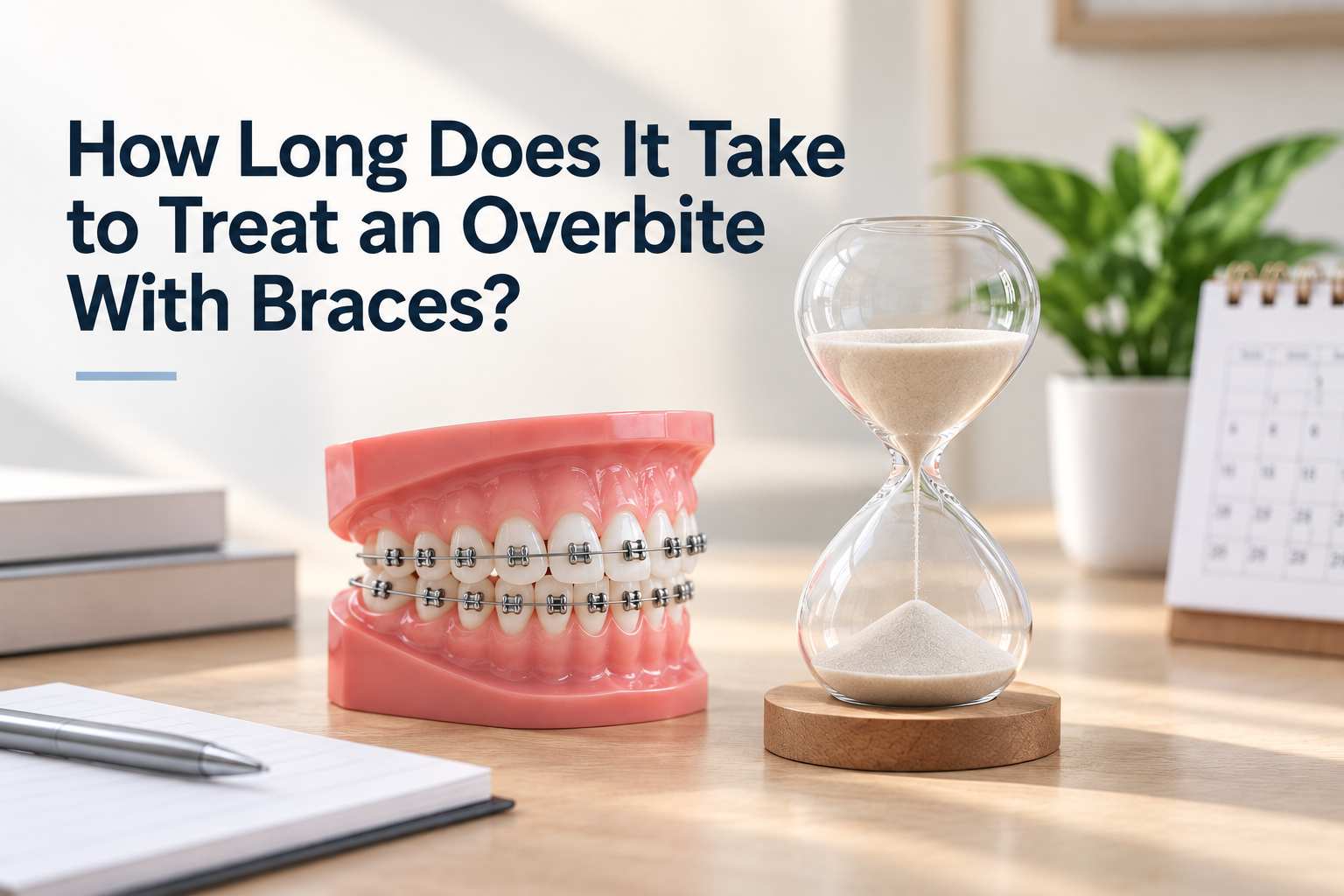
There is no fixed treatment duration for every person with an overbite.
The length of orthodontic treatment can depend on:
- Severity of the overbite
- Degree of tooth movement required
- Crowding or spacing
- Relationship between the upper and lower jaws
- Type of orthodontic appliance
- Whether additional procedures are required
- How consistently treatment instructions are followed
Some cases may require relatively straightforward tooth movement, while more complex cases may involve a longer treatment process.
For this reason, an estimated treatment timeline is generally provided after an orthodontic assessment rather than based on the presence of an overbite alone.
Can Adults Get Braces for an Overbite?
Adults can undergo orthodontic treatment for bite and tooth alignment concerns.
The treatment approach for an adult depends on the condition of the teeth, gums and supporting structures, as well as the nature of the bite problem.
Existing dental work, missing teeth or other oral health considerations may also need to be taken into account when planning orthodontic treatment.
Adults may have several orthodontic options available, including fixed braces and, for suitable cases, clear aligners.
Does a Child With an Overbite Need Braces?
An overbite can become apparent while a child’s permanent teeth and jaws are developing.
Not every child with a deep overbite needs immediate treatment. Depending on the child’s stage of dental development and the nature of the bite, an orthodontist may recommend monitoring the development or consider treatment at an appropriate stage.
An early orthodontic assessment can therefore help identify whether an overbite or another developing bite problem requires attention.
How Much Do Braces for Overbite Cost in Singapore?
The cost of braces for an overbite varies between patients because treatment requirements are not the same in every case.
Factors that may affect the overall cost include:
- Type of braces selected
- Complexity of the overbite
- Treatment duration
- Degree of tooth movement required
- Whether additional dental procedures are needed
- Whether auxiliary dental appliances are needed
- Retainers and post-treatment care
The Braces Practice provides information about its available orthodontic treatments and fees. The actual treatment and associated costs depend on the individual’s assessment and treatment plan.
Overbite Treatment at The Braces Practice

The Braces Practice provides orthodontic treatment in Singapore, with treatment options that include different types of fixed braces and Invisalign.
Depending on the patient’s orthodontic requirements, available options include:
- Metal braces
- Ceramic braces
- Damon braces
- Invisalign
The practice has clinics in Singapore, including locations in Holland Village, Bedok and Bukit Timah/Beauty World.
Information about the available treatments and clinic locations can be found through the relevant service and clinic pages on The Braces Practice website.
What Happens During an Overbite Consultation?
An initial consultation provides an opportunity to assess the individual’s teeth and bite and discuss potential treatment options.
The assessment may include:
- Discussion of the patient’s dental and orthodontic concerns
- Examination of the teeth and bite
- Diagnostic records such as X-rays or digital scans where appropriate
- Assessment of the relationship between the upper and lower teeth
- Discussion of possible treatment approaches
- Consideration of the estimated treatment duration and associated fees
The specific investigations and treatment recommendations depend on the individual case.
Frequently Asked Questions About Braces for Overbite
Can braces fix a severe overbite?
Braces may be used to address certain severe overbites, but treatment depends on the underlying cause. If the overbite is associated with a significant discrepancy in jaw structure, a more complex treatment approach may need to be considered.
An orthodontic assessment is needed to determine the appropriate treatment.
Can adults get braces for an overbite?
Yes. Adults can receive orthodontic treatment for an overbite. The appropriate treatment depends on the condition of the teeth, gums, jaw and supporting structures, as well as the nature of the bite.
How long do braces take to fix an overbite?
Treatment duration varies according to the complexity of the case, the amount of tooth movement required and the treatment approach. An individual treatment timeline can be estimated after assessment.
Is Invisalign suitable for an overbite?
Some overbite cases can be treated with clear aligners. However, suitability depends on the individual’s bite and the tooth movements required.
An orthodontic assessment can determine whether Invisalign or another orthodontic option is appropriate.
Is an overbite the same as an overjet?
No. An overbite refers to the vertical overlap of the upper front teeth over the lower front teeth. An overjet refers to the horizontal distance between the upper and lower front teeth.
A person can have an overbite, an overjet, or both.
Will I need to have teeth removed to fix an overbite?
Not necessarily. Whether tooth extraction is required depends on factors such as available space, tooth position, crowding, and the overall treatment plan.
An orthodontist can determine whether extraction is appropriate for an individual case.
Can an overbite return after braces?
Teeth will move after orthodontic treatment, which is why retainers are commonly used after braces or aligner treatment. The recommended retention approach depends on the individual’s treatment.
Your dentist will usually recommend the retainer regime after your orthodontic treatment is complete. Retention is usually recommended for the long term.