Oral care in children is one of the biggest challenges many parents face. Children usually lack the fine motor skills and patience to brush their teeth properly.
This means parents are largely responsible for ensuring their child’s teeth are clean and healthy until the child is able to brush their teeth thoroughly and independently.
So how do you actually care for your children’s teeth?
Read More: How to Help Children with Dental Anxiety
Is It Necessary to Keep Your Kid’s Teeth Clean?
Many parents assume that baby teeth or primary teeth are not very important because they will fall out eventually. However, healthy baby teeth play a vital role in your child’s development.
They help children chew properly, speak clearly, and hold space for their permanent teeth to grow into the correct position. Removing baby teeth early due to cavities can actually lead to overcrowding or even delays in the eruption of adult teeth.
That is why good oral care should begin as soon as the first tooth appears.
Kid’s Teeth Timeline
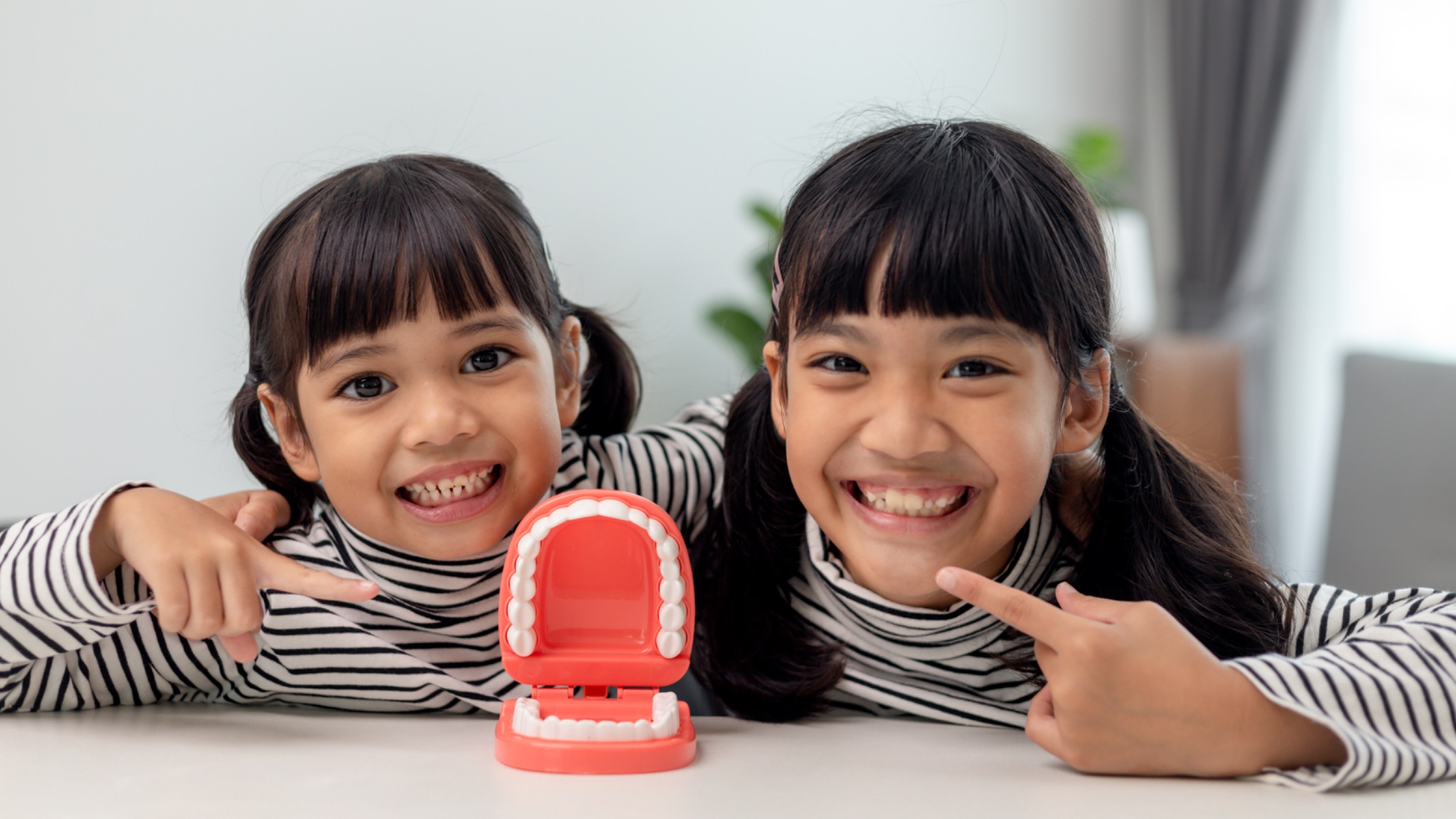
- Birth to 12 Months: Most babies get their first tooth between 6 and 10 months of age, although some may get theirs earlier or later. This stage of teething can cause sore gums, drooling, and a desire to chew on objects.
Once the first tooth appears, start brushing it twice a day with a soft toothbrush and a smear of fluoride toothpaste. Establishing this early can help protect your child from tooth decay.
- Age 1-3: Most children have all 20 primary teeth by the age of 3. These include incisors, canines, and molars to help them chew and speak better. Children also become much more independent around this age. With that said, parents should still supervise brushing and encourage healthy eating habits to reduce the risk of cavities.
Parents may bring their children for their first dental visit at this age to get them acclimatised to the environment, sights and smells of the dental clinic.
- Age 6-12: Children usually develop their first loose baby tooth and begin losing baby teeth around 6 years old. At the same time, their first permanent teeth start erupting behind the baby molars. This period is known as mixed dentition.
They should be able to brush independently by around age 7. Continue regular dental checkups so your pediatric dentist knows how the permanent teeth are erupting.
They can also identify any issues that may require an early orthodontic evaluation and, if needed, braces for children.
- Age 12-13: Most children have lost all of their baby teeth by the early teenage years. They should also have a near complete set of permanent teeth.
Maintaining good brushing and flossing habits remains essential because permanent teeth are meant to last a lifetime. If there are concerns about crowded teeth, bite alignment, or spacing, your dentist may recommend braces or other orthodontic treatment.
Read More: What Is a Palate Expander?
Caring for Your Kid’s Teeth
- Teach Proper Brushing and Flossing Technique
Young children often need help with brushing teeth until they have developed enough coordination to do it on their own. Parents should supervise brushing at least twice a day to make sure every tooth is cleaned.
Flossing with dental floss also becomes important as their teeth begin touching each other. Brushing removes food particles from the surface, while flossing cleans in between them. Together, they become the foundation of good oral hygiene.
- Prevent Cavities Before They Start
One of the most common dental problems in children is tooth decay, also known as dental caries or cavities. Plaque, a sticky film of bacteria, constantly forms on the teeth.
If it is not removed through regular brushing and flossing, it can damage the tooth enamel and lead to decay. Over time, plaque can also harden into tartar (dental calculus), which requires professional scaling and polishing to remove.
Limiting sugary snacks and sugary drinks can significantly reduce the risk of cavities. Encouraging a balanced, tooth-friendly diet is highly recommended. This includes foods rich in calcium and vitamin D to build strong teeth and support healthy bones.
- Keep Up With Regular Dental Visits
Regular visits to a dentist are an essential part of children’s dental care. Routine dental checkups allow your dentist to monitor tooth eruption and provide professional teeth cleaning when necessary.
The dentist may also recommend dental sealants to protect the chewing surfaces of the back teeth or take dental X-rays to check how the teeth are developing beneath the gums. Early detection can prevent more complex treatments later.
- Watch for Common Dental Habits and Problems
Children experience many natural milestones as they grow. This includes teething, developing a loose baby tooth, and eventually losing baby teeth. While these changes are normal, parents should also pay attention to habits that may affect developing teeth.
This includes thumb sucking or prolonged pacifier use. If your child complains of tooth sensitivity or has swollen or bleeding gums, seek professional advice promptly. A dental emergency should never be ignored, as early treatment often leads to better outcomes.
Make Brushing Fun

Children have shorter attention spans and may lose interest quickly if brushing feels like a chore. Making brushing fun and enjoyable is actually a great way to get them brushing better. You can start by letting them choose a toothbrush featuring their favourite colour or character.
Think of it like buying them a toy which they are excited and willing to play with. You can also brush your teeth together to set a good example. Many children are more willing to brush when they see their parents doing the same.
You can even use a simple reward system or showing them videos on visiting the dentist if they brush their teeth properly. Ultimately, making brushing fun can reinforce good brushing habits from a young age, ensuring they brush the right way for the rest of their life.
Signs Your Kid’s Teeth May Have a Problem
Some dental problems are not always obvious, especially in young children who may struggle to explain what they are feeling. It is up to parents to actively look out for symptoms before they escalate into bigger issues. Common symptoms in children include:
- Persistent tooth pain
- Tooth sensitivity to hot or cold foods
- Swollen or bleeding gums
- Bad breath that does not go away
- White, black, or brown spots on the teeth
These signs clearly indicate underlying dental problems that can potentially become more serious if left untreated. Parents are advised to monitor their children closely and seek medical attention promptly if these symptoms persist.
The Bottom Line
Ensuring your child’s teeth are clean and healthy is a shared responsibility between parents and dental professionals. While children may not have the skills or patience to care for their teeth properly, it is up to you to guide them and build good habits from a young age.
At the end of the day, this not only creates a strong foundation but will also benefit their oral health for years to come.
Looking to keep your kid’s teeth healthy? Visit thebracespractice.com or contact us to find out more!